|
Denver Basin |
|
||||||
 |
|

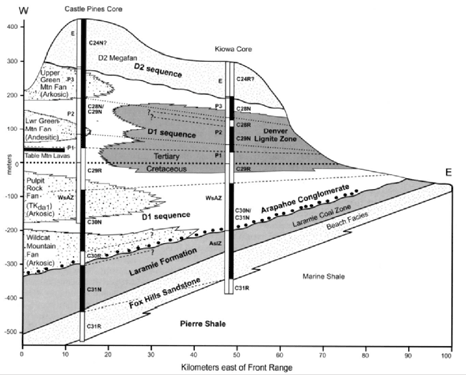
Raynolds, R.G. & Johnson, K.R. (2003). Synopsis of the stratigraphy and paleontology of the uppermost Cretaceous and lower Tertiray strata in the Denver Basin, Colorado. Rocky Mountain Geology. v. 38 no. 1 p. 171-181.
Soister, P.E. & Tschudy, R.H. (1978). Eocene rocks in the Denver Basin, in Pruit, J.D., & Coffin, P.E., Eds., Energy resources in the Denver Basin: Denver, Rocky Mountain Association of Geologists Symposium, p. 231-235. |
|
|
| ||
| |||||||
|  |
|
|||||