

|
Conclusions |
|
||||||
 |
|
Now that we have established the timing of the uplift of the Rocky Mountains, we can discuss the various mechanisms that have been proposed to explain the initial uplift. 1) Flat Slab: As discussed earlier the idea of the shallow subducted Farallon plate is the most supported theory. However, the north-south curvilinear shape of the uplift, with an uplift axis that does not line up with the approach of the Farallon plate to the southwest, is problematic. If a Flat Slab did cause the uplift of the Rocky Mountains it would have had to bend around the Colorado Plateau to the southwest, or somehow involve the Colorado Plateau, without losing the force necessary to create the Rocky Mountains. 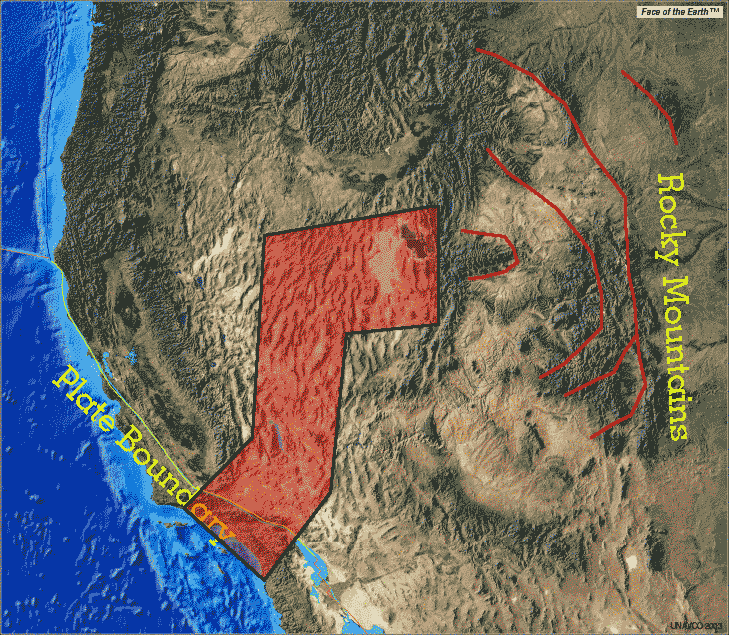 2) Plate Flexure: The east-west pattern of uplift shows a similar pattern to that expected to result from a foreland basin model with an eastward migrating forebulge. This model explains many mountain ranges on Earth. However, the axis of the uplift should parallel the plate boundary. Again the north-south curvilinear shape is a rather puzzling feature. Coeval flat slab subduction in the southwest and the passage of the Baja-BC exotic terrain to the northwest could have centralized westward forces along the axis of the Laramide Orogeny. To investigate this theory fully requires calculating the amount of depression and/or the resulting sedimentation during the Laramide Orogeny west of the forebulge. 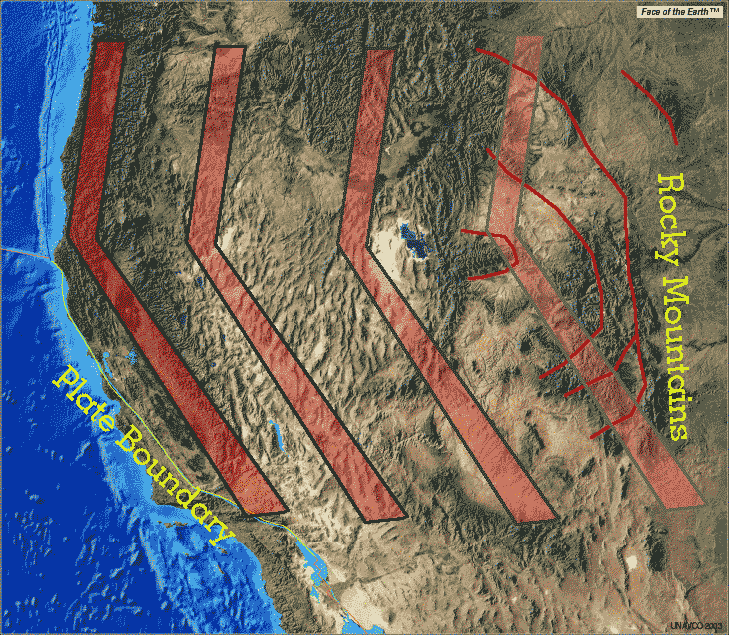 
|
|
|
| ||
| |||||||
|  |
|
|||||